A life in medicine: Dr Steve McQuillan reflects on service, resilience and finding purpose
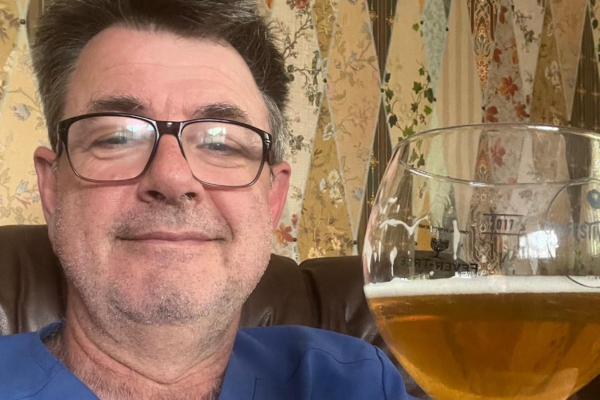
As Dr Steve McQuillan prepares to retire, he does so with some reluctance to find himself in the spotlight. Asked to reflect on his achievements, his instinct is to point to the dedication of colleagues and to describe much of what he has done as simply part of the job.
Yet his career has been anything but ordinary. It has encompassed general practice, diabetes care, forensic medicine, emergency care, sports medicine, clinical education and medical leadership. More importantly, it has been shaped by a sustained commitment to patients, colleagues and the future of medicine in south Cumbria.
Steve qualified from Newcastle University in 1987, having already received the university's prizes for general practice in both his second and fifth years. General practice had always been his intended destination, although his early training also included anaesthetics, ophthalmology, ENT and general medicine.
His route to Barrow began with an anonymous advertisement in the back of the British Medical Journal. Only after responding did Steve discover the opportunity was in Barrow-in-Furness. At the time, 20 doctors applied for the single partnership post, a striking contrast with the recruitment challenges faced by general practice today.
The move required Steve and his wife Mandy to leave the North East, but Cumbria became their home and the place where they raised their five children.
A career built around opportunity
Steve joined his practice as a junior partner, expecting progression after a couple of years. Within two months, however, he had become senior partner and was leading the practice's introduction of fundholding because he was the only partner with previous experience of it.
As diabetes lead for the local health group, he helped every practice nurse in Barrow gain a diploma in diabetes care. At a time when there was no local diabetes consultant, Steve contributed directly to teaching and development, helping strengthen local expertise and eventually attract a consultant to the area.
His interests soon extended beyond general practice. For around five years he worked as a forensic physician for Cumbria Constabulary, attending unexpected deaths and other serious incidents. Although some experiences were traumatic, they gave him a deeper appreciation of life and a lasting respect for police officers and the situations they face.
Steve was also a founding member of the Furness Emergency Doctor Service following changes to GP out-of-hours provision. The organisation later became part of a countywide service, where he served as a non-executive director for around a decade.
Alongside this, he qualified in sports medicine and became a Level 3 cricket coach. Weekends often found him working pitch-side with local rugby and professional football teams, combining medicine with a lifelong love of sport.
Creating a future for medicine in south Cumbria
Of all the strands of his career, education may prove to be Steve's most enduring legacy.
Around a decade after qualifying, concerned by the difficulty of recruiting GPs to Barrow, he concluded that the solution was not simply to attract doctors but to train them here. To become a trainer, he resat the Membership of the Royal College of General Practitioners examination, achieving a distinction.
His practice became a training practice and, for around 20 years, regularly hosted GP trainees. Steve later became Training Programme Director for south Cumbria, helping coordinate placements across hospital and community settings.
The results have been significant. What was once a small training programme has grown substantially, with five local training practices now attracting strong interest from trainees. Steve estimates around 100 GPs have passed through the programme and roughly half have remained in the area.
There is perhaps a lesson in leadership here. Rather than accepting recruitment difficulties as inevitable, Steve helped create the conditions that encouraged doctors to learn, stay and build their careers locally.
His practice was also an early adopter of paperless working and later received an Outstanding rating from the Care Quality Commission. More recently, Steve has served as Medical Director for Morecambe Bay Primary Care Collaborative, supporting its development and growth while providing valued pastoral support to colleagues across the local health economy.
The rewards and the realities
Steve does not romanticise general practice. He describes it as both deeply rewarding and extremely difficult.
Some of the hardest moments involved the loss of patients, particularly the unexpected death of a child with a rare illness. Experiences like these stayed with him long after the clinical work had ended and reinforced the emotional weight carried by many doctors.
For Steve, resilience has depended partly on maintaining interests beyond day-to-day practice. Forensic medicine, education, leadership and sport all provided opportunities to keep learning and renew his enthusiasm for medicine.
"Look out for opportunities. Opportunities always appear," he says. "Chase things out of interest rather than monetary gain. Monetary gain is not very satisfying at the end of the day."
Equally important is the support of colleagues. Steve recalls taking over a colleague's out-of-hours commitment immediately after a family bereavement. There was no discussion beyond a simple message: "I've got your back."
His reflections also highlight the importance of life beyond work.
"You've got to remember to be kind to yourself as well," he says. "Don't let yourself get overwhelmed by a career. You've got to make sure that you don't lose sight of the fact that you're a dad and a husband as well."
Medicine as a professional home
For anyone considering medicine today, Steve's career shows just how broad a medical career can become. A doctor's path can take many different directions while remaining grounded in the same values of service, curiosity and care for others.
His advice begins with realism. General practice can be challenging and demanding, but the rewards go well beyond financial recognition.
In a community such as Barrow, he has experienced genuine gratitude from patients and encourages younger colleagues always to treat people with respect and never make assumptions about them because, as he puts it, "they will always surprise you".
Looking back, it is the goodwill of patients that he values most.
"The reward is the feedback and the goodwill that you receive from patients about what you've done for them," he says. "That is what makes the job worthwhile."
He retires having cared for generations of patients, supported colleagues through difficult moments and helped train many of the doctors who now serve local communities. His career demonstrates that medicine can be demanding without becoming joyless, and that professional longevity is sustained not only by endurance but by curiosity, compassion and a willingness to keep contributing.
Perhaps that is the clearest expression of Steve's legacy. He leaves behind not simply a long career, but a community of patients, colleagues and clinicians whose lives and work are better because he chose to make south Cumbria his home.
More from the blog
Lorem ipsum dolor sit amet, consectetur adipiscing elit.